- 46 BC -
Julius Caesar defeats Titus Labienus at the Battle of Ruspina. You’ve never heard of Titus Labienus? Me neither. I guess now we know why.

I was looking for a picture of him to put an amusing
fail-related caption on but couldn’t find one.
Have an adorable puppy instead.
- 1341 -
Wat Tyler is born. He is remembered now, by many, as the ultimate ancestor of trade unions, revolutions and living under any system other than brutal, medieval feudalism. It’s easy to play the “Wat Tyler, father of [insert cause here]” game since the only literate folks were on the other side in the Peasants’ Revolt. We don’t know what he actually did believe beyond taking an educated guess that he’d prefer not to live in misery and die early of preventable causes, all the while covered in shit.
The story goes that the Mayor of London didn’t like the cut of his jib and murdered the shit out of him. This is a solution employed by many throughout history for dealing with annoying and inconvenient people. As you’ll see below . . .
- 1642 -
Charles I sends some guys around to arrest Parliament. This starts the English Civil War.
That’s the version of it that most of us are familiar with. The truth, as is often the case, was a bit more complicated. For a start nobody ever mentions Charles’ sister.
Wind the clock back about 30 years and you see (said sister) Elizabeth being married off to a German fellow called Fredrick (5th Elector Palantine, Head of the Protestant Union). Shortly thereafter the people of Bohemia (who elected their own “kings” but were really just a province of the Holy Roman Empire), fearing that their Hapsburg king, Ferdinand II, would turn Bohemia into an absolute monarchy, elected Frederick instead.
Without going into detail, an event followed called the Thirty Years War. Fought largely in what’s now Germany it plunged many of the European powers into a conflict that would drag on for three decades. Although the Bohemian dispute was largely political the British royal family saw it as a religious one that made a union between Catholic and Protestant powers imperative for preserving peace in Europe. The obvious solution was for Charles I’s father, King James (yeah, the Bible guy, that one), to arrange a marriage to the Spanish Infanta. Parliament hated the idea.
A somewhat covert mission by Charles and Co. ended badly. The Spanish were only prepared to go through with the marriage if Charles agreed to become a Roman Catholic and remain as a hostage in Spain for a year. Clearly these terms were not acceptable. It was a humiliating defeat and Charles wanted to repay it with another one, to be delivered on the battlefield. On his return home Charles demanded his father declare war on Spain. Pursuing funds for this did involve sacking the odd minister here and there so the struggle for power between King and Parliament was well underway before Charles had even become king.
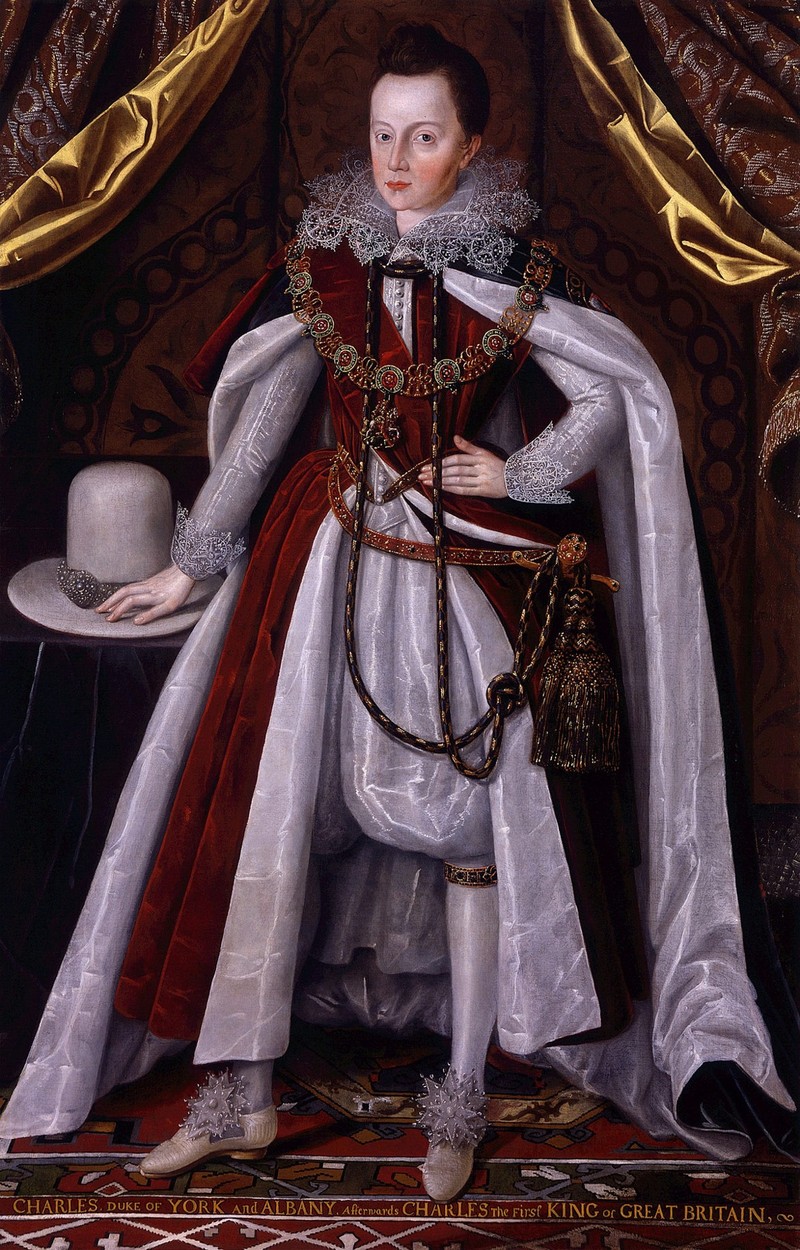
“Daaaaaad, Jennifer Watson won’t go to the school dance with me
can you please bomb the shit out of her house!”
can you please bomb the shit out of her house!”
England had lost substantial territory on the continent during the Thirty Years War and the Spanish were helping the side the English weren’t on. To Charles the solution was simple: he would wage war on Spain and parliament would pick up the tab. Parliament didn’t like the sound of that and wouldn’t let him use the treasury as a war chest. Charles believed in the divine right of kings which, in practical terms, meant he should be able to levy taxes as and when he pleased and arrest anyone who annoyed him (it sounds quite horrible to us, and it is, but in the preceding centuries had been quite commonplace).
Charles I sounds like the villain of tale, which isn’t entirely unfair but it would be remiss not to indict his father’s favourite, George Villiers, 1st Duke of Buckingham. Villiers had engineered the dismissal of Francis Bacon and Lionel Cranfield. Villiers had come along on (and, by many accounts, completely screwed up) the failed mission to Spain (the Spanish Ambassador asked for him to be executed on his return). Villiers had been riding roughshod over parliament with Charles since before James had died. Villiers led the failed Cadiz Expedition and the equally failed Siege of Saint Martin de Re. Fortunately, when he was down the pub one day, an army officer (wounded in one of Villiers’ earlier failures) kindly stabbed him to death before he could fuck anything else up.

Don’t worry, guys, he’ll probably fail at dying, too.
That’s enough for today. You’re supposed to be remembering the Ogoni anyway.

No comments:
Post a Comment