- 1066 -
Edward the Confessor dies childless, later that year came the Norman Invasion. Despite the grave temptation to do otherwise I’ll leave the details of that fascinating slab of medieval history for another time (I should leave it ‘til the 14th of October but I’m not sure I can hold it that long) and focus on the life and reign of the pivotal sovereign that perished on this day 945 years ago.
Many of you will know the name of Æthelred the Unready. It is widely believed that he came to be known as this because he was perpetually unprepared for the Danes’ attacks on his territory and demands for “danegeld.” He was, at the time, actually known as Æthelred Unræd; an Anglo-Saxon play-on-words which has naught to do with unreadiness. The word “Unræd” was an adjective in their tongue meaning “with no reputable policy” which was paired with his name; Æthelred, meaning “noble policy.” Jokes, it is said, never work when explained and one expects the same of Anglo-Saxon ones. For a native speaker of the same one presumes it was gold.
Poor old Æthelred tends to get a pretty bad rap in the common wisdom. He came to power at the tender age of ten in the wake of his brother’s murder and was used as a pawn in the constant power struggles of day. That he managed to survive at all, much less retain the crown is little short of amazing. Had he received the support of his generals he could well have driven the Danes from the British Isles and been remembered as a second Alfred the Great (from whom he was, after all, directly descended). As it was he had to keep buying off the Danes until in 1009 their king, Sweyn Forkbeard, demanded all of England as tribute. By 1013 Æthelred fled to . . . wait for it . . . Normandy where his wife, Emma, was already with her brother Richard the Good, Duke of Normandy, father of Robert the Devil, father of William the Bastard.
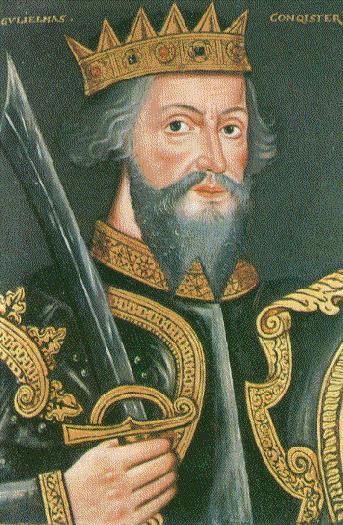 |
| If someone can take over your country and divide it up amongst a bunch of French knights you should probably come up with a more flattering moniker. |
Sweyn Forkbeard died suddenly after only a month or so and the title of King passed to Æthelred’s son Edmund Ironside in April 1016. By October he had been defeated by Sweyn’s son Cnut at the Battle of Ashingdon and by November had been assassinated.
In contrast to Æthelred, Cnut is viewed by many in a very favourable light despite his ruthless methods. Cnut exiled Edmund’s sons and had his brother killed before securing his claim to the throne by marrying Æthelred’s widow Emma, although he was still married. This would tie him to the previous ruling house and prevent him from killing off her remaining sons, one of whom was Edward (later the Confessor) who would reign after Cnut’s two sons.
Edward had spent 26 years as an exile in Normandy. His dress, language and customs were all Norman-French as was the Architectural Style he favoured (his most majestic building project, Westminster Abbey, was built in the Norman style despite being constructed before the Norman Invasion).
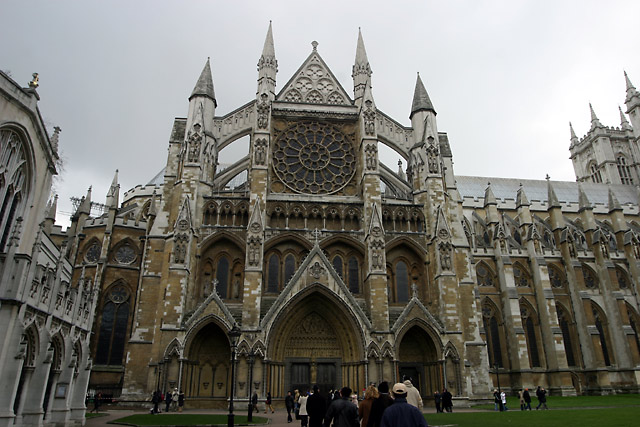 |
| Bloody French . . . at it again. |
To secure his position he needed to marry Eadgyth, daughter of Earl Godwin, one of the most powerful men in the country. Edward could be forgiven for doing his best Jimmy Cagney, given that Godwin was a dirty rat who had indeed killed his brother Alfred to keep Cnut’s son on the throne. Offering Godwin a chance to have his own grandson as heir to the English crown was a sure fire way to keep Godwin on side and make sure he didn’t just whack anyone else who got in the way and put one of his wretchedly corrupt sons in power.
When an heir was not forthcoming it was clear things were going to get ugly . . . but as I said earlier, that’s another story for another post. Stay tuned to find out what happens next (or just go and read a damn book).
I’m sorry that it’s only a short one today. I’ve got a lot going on this week.

This comment has been removed by the author.
ReplyDeleteThis comment has been removed by the author.
ReplyDeleteAs I was trying to say without typos,
ReplyDeleteEdward the confessor is one of my favourite English monarchs whose feast day was originally the 5th of January. It was moved later to the 13th of October (the day before the event you are itching to talk about). According to my 2011 published church calendar (but in contrast to what wikipedia states) it is still celebrated on the 13th of October.
http://www.catholic.org/saints/saint.php?saint_id=223
ReplyDelete